Congressional Medal of Honor
Medal on Loan to the National Medal of Honor Museum - March 19, 2026 through March 31, 2028.
Our library was contacted by the museum curator at the National Medal of Honor Museum in Arlington, Texas to discuss the possibility of loaning the Bensinger Medal of Honor currently housed on display at our library.
The National Medal of Honor Museum Foundation is a 501(c)(3) educational organization dedicated to safeguarding and celebrating the legacy of the Medal of Honor and its recipients.
After careful consideration and gathering additional information, the Library Board of Trustees approved a two-year loan of the medal to the museum. We recognize the importance of sharing this Medal of Honor with a broader audience. It is our hope that through education and public exhibition, visitors will gain a deeper appreciation for the extraordinary service represented by the medal and the courage, sacrifice, commitment, and integrity it symbolizes.
Recently on display at the museum was the Medal of Honor awarded to Jacob Parrott, the first soldier to ever receive the award for his role in the Andrews Raid. It is the museum’s hope to continue sharing the story of the Andrews Raiders by displaying a medal from another member of the raid. Parrott’s medal is currently being returned to the United States Military Academy at West Point.
More information about the Andrews Raiders can be found here:
Pressroom 16 - Off the rails - The National Medal of Honor Museum
The Library houses the Congressional Medal of Honor that was awarded to William Bensinger, who received the honor for his part in the Andrews Raid, during the Civil War on April 12, 1862.
Mr. Bensinger was a native of McComb and is buried in the village cemetery. The Medal was presented to the library in 1974 by Mary Francis Bensinger, great-granddaughter of William Bensinger.
She is the daughter of Fred Bensinger, William's grandson.
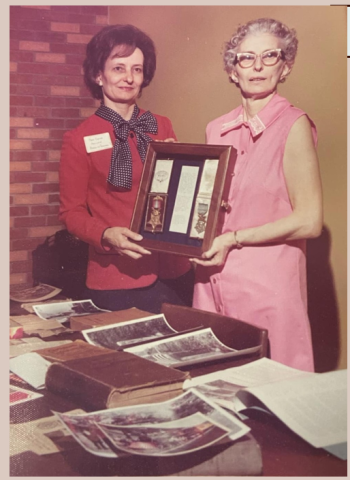
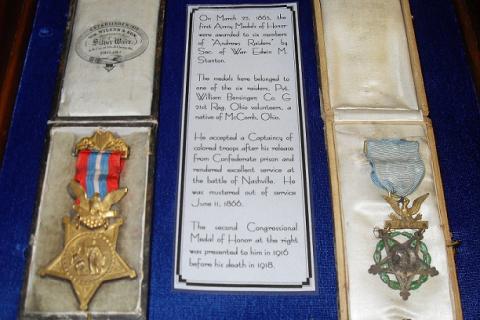
Bensinger and a fellow McComb native John Reed Porter, who also is buried in McComb cemetery, were decorated by Abraham Lincoln's Secretary of War Edwin M. Stanton on March 25, 1862, for their part in the 22-man raid behind enemy lines during the war between the states.
These medals of Honor, the highest military honor given in the United States, were awarded to William Bensinger. The Medal of Honor was redesigned in 1904, and Bensinger was presented with the newer version in 1916, two years before his death. Left to right is the 1863 medal and the 1916 medal.
Known as the Andrews Raiders, their mission was to sever enemy lines of transportation in an important segment of southern territory between Atlanta and Chattanooga.
The men took over a northbound train, setting bridges afire and cutting telegraph lines as they went north. Being pursued by the southerners they finally had to abandon the train a little over halfway to Chattanooga. They took to the woods and were eventually captured by the southerners.
Eight of the 22 men were hanged by the Confederacy with the two McComb soldiers being sent to a southern prison. Porter later escaped, and Bensinger was an exchange prisoner. Mr. Bensinger died in 1918 and Mr. Porter in 1923.
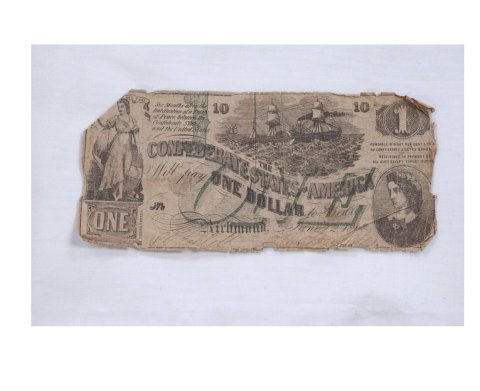
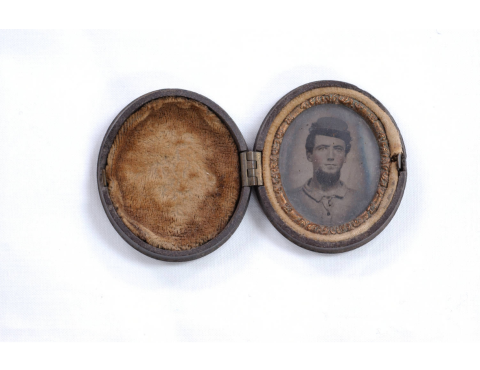
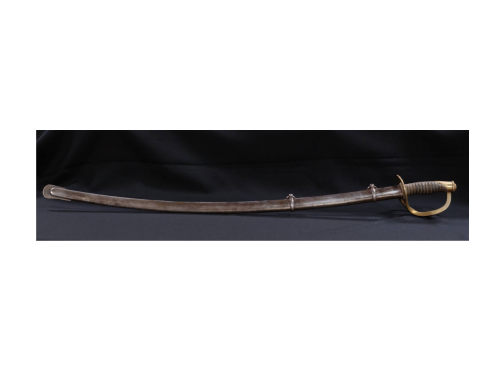
The Congressional Medal is on Display at the McComb Library along with Confederate currency, locket and sword.
The currency was brought back to Ohio by Bensinger. The locket includes Bensinger's photograph and may have been given to a loved one while he was away. Bensinger used this sword as a soldier in the 21st Ohio Volunteer Infantry, in which he served from 1861 until he volunteered for the mission as one of the Andrews Raiders.